
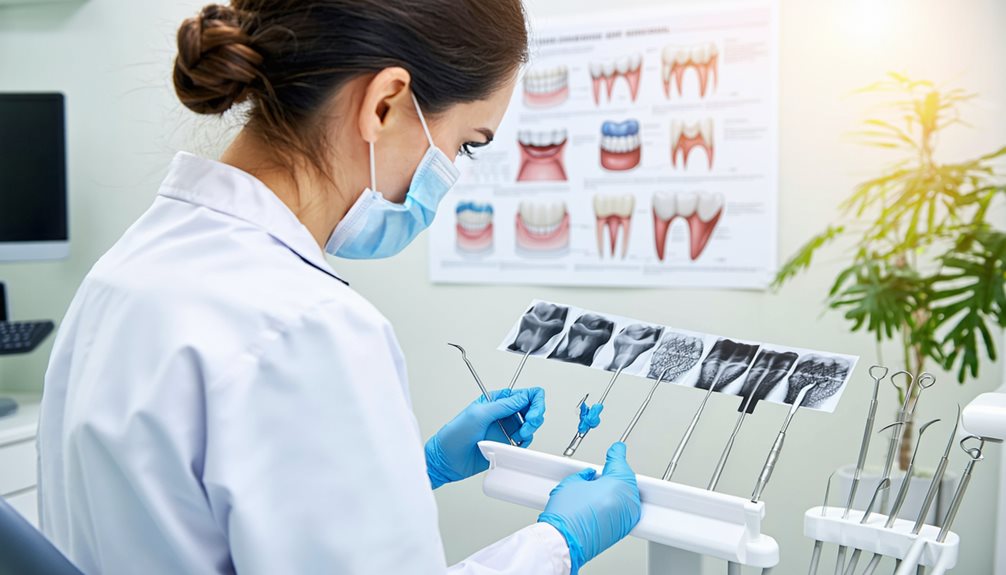
Thorough periodontal care plans are structured strategies designed to manage periodontal health through accurate assessment, custom treatment, and continual maintenance. These plans begin with a detailed evaluation using advanced diagnostic tools to gauge the extent of periodontal disease. Personalized interventions are developed based on this assessment, incorporating microbial control, lifestyle modifications, and sometimes, laser or regenerative therapies. Regular maintenance, including professional cleanings and follow-ups, is critical to prevent disease recurrence, informed by periodic evaluations. These care plans guarantee the effective and long-term management of periodontal conditions, accommodating individual clinical needs and paving the way for ideal patient outcomes. Further insights await exploration.
Understanding Periodontal Disease
Periodontal disease, a prevalent chronic inflammatory condition affecting the supporting structures of the teeth, encompasses a spectrum of disorders ranging from gingivitis to advanced periodontitis. The disease is characterized by the progressive destruction of periodontal tissues, including the gingiva, periodontal ligament, and alveolar bone. The understanding of periodontal symptoms is essential for early diagnosis and intervention. Common symptoms include gingival inflammation, bleeding, pocket formation, and alveolar bone loss. These manifestations are often exacerbated by microbial plaque accumulation and host immune responses.
Disease prevention is a cornerstone in managing periodontal health. Innovative strategies focusing on microbial control, host modulation, and lifestyle modifications are vital. Regular dental assessments, along with professional cleaning, can greatly mitigate the risk of disease progression.
Furthermore, advancements in biomaterials and regenerative techniques offer promising avenues for tissue restoration.
In recent years, the integration of molecular biology and genomic research has opened new frontiers in disease prevention. Identification of genetic predispositions and microbial profiles allows for personalized treatment approaches. Embracing these innovations not only enhances patient outcomes but also propels the field toward a more predictive and preventive model of care, transforming periodontal management paradigms.
Elements of a Care Plan
A thorough periodontal care plan is structured around three critical elements: assessment and diagnosis, treatment plan components, and maintenance and follow-up.
Accurate assessment and diagnosis form the foundation, enabling clinicians to identify the specific periodontal conditions and tailor interventions accordingly.
The implementation of a detailed treatment plan, followed by regular maintenance and follow-up appointments, guarantees the long-term management and stability of periodontal health.
Assessment and Diagnosis
Effective evaluation and diagnosis form the cornerstone of any thorough periodontal care plan. By employing cutting-edge diagnostic tools and meticulously reviewing patient history, clinicians can achieve an extensive understanding of the patient’s periodontal health status. This systematic approach guarantees the identification of any underlying periodontal disease and facilitates the formulation of a precise care strategy.
Key elements in this process include:
-
Diagnostic Tools: Utilization of advanced diagnostic tools, such as digital radiography and periodontal probing, provides detailed insights into the periodontal structures. These technologies enable visualization of bone loss, pocket depths, and other critical indicators, guaranteeing an accurate diagnosis.
-
Patient History: A detailed patient history is imperative, encompassing medical history, lifestyle factors, and previous dental treatments. This information aids in understanding potential risk factors and systemic conditions that may influence periodontal health, consequently allowing for tailored interventions.
-
Clinical Examination: An extensive clinical examination involves a thorough evaluation of gingival tissues, plaque accumulation, and bleeding on probing.
It also includes the review of occlusal relationships and mobility of teeth, which are critical in evaluating the severity of periodontal conditions.
Treatment Plan Components
With a thorough understanding of the patient’s periodontal status established, the formulation of a detailed treatment plan is the next critical step in periodontal care. This plan is a complete outline of individualized care strategies aimed at achieving specific treatment goals. The components of this plan must be meticulously crafted to reflect the unique periodontal challenges presented by the patient, ensuring that interventions are both targeted and effective.
Key elements of a treatment plan include the identification of primary treatment goals, such as the reduction of periodontal pocket depths, the elimination of infection, and the restoration of periodontal health. Care strategies are then developed to align with these goals, encompassing both non-surgical and surgical interventions.
Non-surgical options might involve scaling and root planing, while surgical strategies could include flap surgery or bone grafting, as indicated by the patient’s condition.
Furthermore, adjunctive therapies, such as antimicrobial agents or laser treatments, may be integrated to enhance outcomes. The treatment plan also incorporates a timeline for implementation, prioritizing interventions to optimize periodontal recovery and health.
Ultimately, a well-structured treatment plan serves as a dynamic roadmap, guiding the patient toward enhanced periodontal stability and overall oral health.
Maintenance and Follow-Up
Ensuring long-term periodontal health necessitates a rigorous maintenance and follow-up regimen as a critical component of the care plan. This phase is pivotal in preventing disease recurrence and promoting sustained oral health.
It is imperative to implement a systematic approach that encompasses three primary elements:
-
Patient Education: Educating patients about periodontal disease and its implications fosters adherence to prescribed oral hygiene practices. This involves personalized guidance on effective brushing and flossing techniques, alongside the use of interdental aids.
-
Clinical Monitoring: Regular professional evaluations are essential for the early detection of any pathological changes. These assessments typically involve detailed periodontal charting, radiographic analysis, and microbial testing as required, ensuring that any deviations from ideal health are promptly addressed.
-
Lifestyle Modifications: Encouraging patients to adopt healthier lifestyle choices greatly impacts periodontal stability. Recommendations may include dietary adjustments to reduce sugar intake, cessation of tobacco use, and stress management techniques to minimize systemic inflammation.
These components, when integrated effectively, not only contribute to the preservation of periodontal structures but also empower patients to take an active role in their oral health management.
Consequently, maintenance and follow-up are indispensable in the pursuit of innovative, patient-centered periodontal care.
Role of Regular Assessments
Regular assessments serve as a cornerstone in thorough periodontal care plans, with the frequency of dental checkups tailored to individual risk profiles and disease status.
These evaluations are essential for monitoring periodontal health and detecting any deviations from the expected healing trajectory, thereby facilitating timely intervention.
Frequency of Dental Checkups
The frequency of dental checkups is a critical component in the maintenance of periodontal health, serving as a preventative measure against the progression of periodontal disease.
Regular dental visits are essential to identify early signs of periodontal issues, thereby enabling timely intervention and innovative treatment strategies.
In the domain of periodontal care, these periodic assessments offer several advantages:
-
Early Detection: Regular checkups allow for the early identification of periodontal disease indicators, such as gingival inflammation or pocket depth changes, which can be addressed before they escalate.
-
Personalized Care: Customizing the frequency of dental visits guarantees that each patient receives care tailored to their unique periodontal condition, enhancing treatment efficacy.
-
Prevention-oriented Approach: Frequent assessments facilitate a proactive stance in maintaining oral health, preventing the advancement of periodontal disease through timely scaling, root planing, and other preventive measures.
Importance of Monitoring Progress
Building upon the individualized frequency of dental checkups, monitoring progress through regular assessments plays a pivotal role in effective periodontal care.
This structured approach allows for the identification of both subtle and overt changes in periodontal health, enabling the early detection of potential complications or regression. In this situation, technological advancements such as digital periodontal probing and intraoral scanning provide innovative tools for capturing precise data, thereby enhancing the accuracy of progress evaluations.
The significance of regular assessments extends beyond mere observation; they form the basis for informed treatment adjustments. Based on the data gathered, clinicians can modify therapeutic strategies to better align with the evolving needs of the patient.
This may involve altering the frequency of interventions, introducing adjunctive therapies, or refining oral hygiene recommendations. Such dynamic adaptation guarantees that the treatment remains both effective and personalized, ultimately contributing to ideal periodontal outcomes.
Importance of Personalized Treatment
Tailored interventions are critical in periodontal care, as they align treatment strategies with the unique clinical presentation and individual risk factors of each patient.
Personalized care guarantees that periodontal interventions are not only effective but also efficient, minimizing unnecessary procedures while maximizing therapeutic outcomes. Tailored strategies are grounded in a thorough assessment that considers the patient’s specific periodontal condition, genetic predispositions, lifestyle factors, and overall health status.
The implementation of personalized care in periodontal management involves several key components:
-
Risk Assessment: Evaluating the patient’s susceptibility to periodontal disease based on genetic markers, systemic health conditions, and environmental influences. This step is essential to identify high-risk individuals who may benefit from more intensive management.
-
Diagnostic Precision: Advanced diagnostic tools, such as digital imaging and molecular diagnostics, aid in accurately identifying the severity and extent of periodontal disease, thereby allowing for the formulation of a precise treatment plan tailored to the patient’s needs.
-
Customized Treatment Protocols: Developing individualized treatment plans that incorporate the latest technological advancements, such as laser therapy and regenerative techniques, guarantees that interventions are aligned with the latest evidence-based practices and patient preferences.
Benefits of Professional Cleaning
Integral to maintaining ideal periodontal health, professional cleaning offers a multitude of clinical benefits that extend beyond basic oral hygiene. Foremost among these benefits is the meticulous removal of dental plaque and calculus, which are primary etiological factors in periodontal disease.
Utilizing advanced cleaning techniques, dental professionals employ ultrasonic scalers and hand instruments to disrupt and remove bacterial biofilm that standard brushing and flossing often fail to address. This precise intervention considerably reduces periodontal pocket depths, thereby fostering a healthier gingival environment.
Moreover, professional cleaning provides an opportunity for early detection of potential pathologies. During these sessions, clinicians can identify early signs of gingival inflammation or periodontal attachment loss, thereby facilitating timely intervention.
The professional benefits of such diagnostic acumen cannot be overstated, as they play a critical role in preventing the progression of periodontal disease.
In addition, professional cleaning techniques contribute to cosmetic enhancements by removing extrinsic stains and polishing tooth surfaces, ultimately promoting a brighter smile.
These sessions also reinforce patient education, wherein practitioners can tailor oral hygiene recommendations based on individual needs. Consequently, the integration of professional cleaning within thorough periodontal care plans is indispensable for achieving ideal oral health outcomes.
Long-term Maintenance Strategies
Long-term maintenance strategies are essential for sustaining periodontal health after initial treatment. These strategies are designed to align with long term goals, focusing on the prevention of disease recurrence and the promotion of ideal oral health. By implementing a detailed maintenance protocol, patients can achieve sustained periodontal stability.
The incorporation of preventive measures is vital, ensuring that the periodontal environment remains conducive to health and free from pathogenic influences.
A thorough maintenance plan typically includes:
-
Regular Professional Cleanings: Scheduled at intervals determined by clinical assessments, these cleanings are critical for removing plaque and calculus that cannot be managed by personal oral hygiene alone.
-
Consistent Home Care Regimens: Customized to the individual’s periodontal status, these regimens incorporate innovative oral hygiene tools such as interdental brushes and antimicrobial rinses to enhance plaque control.
-
Periodic Reevaluation: Regular assessments by dental professionals are essential to monitor periodontal status, allowing for timely adjustments to the care plan and ensuring it remains aligned with the patient’s long term goals.
Adopting a proactive stance through these measures not only fosters periodontal health but also leverages innovative strategies to adapt to evolving clinical needs, thereby enhancing patient outcomes.
Frequently Asked Questions
How Much Do Comprehensive Periodontal Care Plans Typically Cost?
The cost of extensive periodontal care plans varies considerably, influenced by treatment options and cost factors such as severity of periodontal disease, geographic location, and practitioner expertise. Innovative diagnostic technologies may also impact overall financial considerations and patient outcomes.
Can Periodontal Care Plans Be Covered by Insurance?
Insurance coverage for periodontal care plans varies, contingent upon individual dental benefits. Typically, plans may cover diagnostic procedures, but coverage for advanced treatments is less common. Patients should consult their provider for specific details regarding their dental benefits.
Are There Any Dietary Restrictions During Periodontal Treatment?
During periodontal treatment, patients are advised to follow specific dietary guidelines. Soft food choices that minimize mechanical irritation and promote healing are recommended. Avoiding hard, sticky, or spicy foods can enhance recovery and optimize treatment outcomes.
How Often Should Periodontal Care Plans Be Updated?
Periodontal care plans should be updated per frequency recommendations, typically every three to six months, to guarantee treatment effectiveness. Regular updates facilitate timely adjustments, enhancing clinical outcomes and aligning with innovative treatment modalities for ideal periodontal health management.
What Qualifications Should a Periodontal Specialist Have?
A periodontal specialist should possess advanced periodontal certifications and significant specialist experience. These qualifications guarantee expertise in innovative treatments and clinical techniques essential for diagnosing and managing complex periodontal diseases, promoting ideal patient outcomes and advancements in periodontal care.
Conclusion
Extensive periodontal care plans are essential for the effective management of periodontal disease, emphasizing the importance of personalized treatment and regular assessments. Key elements include a thorough understanding of the disease, professional cleaning, and long-term maintenance strategies to prevent recurrence. These plans are tailored to meet individual needs, ensuring ideal oral health outcomes. By prioritizing personalized care and consistent monitoring, periodontal care plans contribute greatly to the prevention and management of periodontal disease, enhancing overall dental health.

