
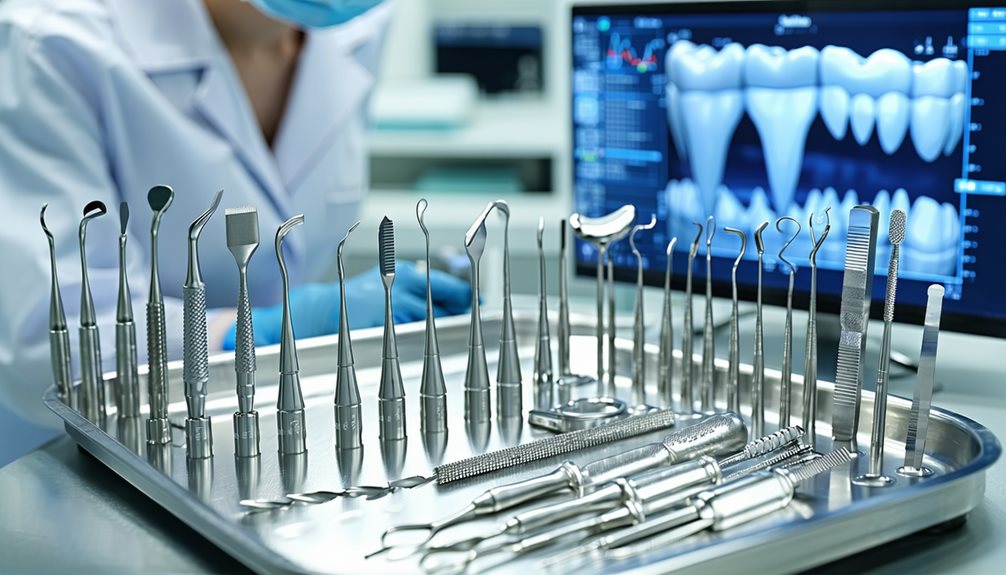
Maintaining periodontal health involves multiple advanced techniques. Regular dental cleanings with ultrasonic scalers disrupt pathogenic biofilms, while scaling and root planing employ manual tools for precise debridement, improving clinical attachment. Laser therapies, such as diode and Nd:YAG, offer minimally invasive solutions, enhancing outcomes through targeted bactericidal actions. Antimicrobial treatments, including localized antibiotics in gels or microspheres, target residual pathogens effectively. Gum grafting methods, tailored to patient needs, restore aesthetics and function, supported by meticulous post-operative care. In addition, guided tissue regeneration using biocompatible barriers fosters periodontal tissue recovery. Further exploration into these innovations reveals extensive periodontal care strategies.
Regular Dental Cleanings
Regular dental cleanings play a pivotal role in maintaining periodontal health by effectively removing plaque and calculus that cannot be eliminated through routine brushing and flossing alone. This prophylactic intervention is indispensable for disrupting the biofilm that harbors pathogenic bacteria responsible for periodontal disease progression.
Advanced instrumentation, such as ultrasonic scalers and hand tools, guarantees precise debridement and minimizes tissue trauma.
In conjunction with clinical interventions, robust home care regimens are paramount. Patient education is integral to fostering compliance with tailored oral hygiene practices. Educating patients about the etiology of periodontal disease and the role of biofilm in its pathogenesis empowers them to adopt innovative home care techniques.
These may include electric toothbrushes with oscillating heads, interdental brushes, and antimicrobial mouth rinses, which are more effective in disrupting biofilm than traditional methods.
Furthermore, the adjunctive use of digital platforms and applications can enhance patient education, allowing for personalized feedback and tracking of oral hygiene efforts. Regular follow-ups and assessments can refine these strategies, optimizing periodontal health outcomes.
This thorough approach underscores the synergy between clinical interventions and patient-driven home care, advancing periodontal health through innovation and precision.
Scaling and Root Planing
Scaling and root planing constitutes a cornerstone in the non-surgical management of periodontal disease. This procedure is critically important for the removal of subgingival biofilm and calculus deposits, which are principal contributors to periodontal pathologies.
Scaling techniques employ both manual and ultrasonic instruments to meticulously debride the tooth surfaces. These instruments are designed for precision, allowing for the effective disruption of biofilm and removal of calculus without causing trauma to the surrounding periodontal tissues.
Root planing involves the strategic smoothing of root surfaces, aiming to eliminate any residual debris and bacterial endotoxins, which can perpetuate inflammation. This process not only facilitates the reattachment of gingival tissues but also reduces pocket depth, thereby creating an environment less conducive to pathogenic bacterial colonization.
Clinical studies underscore the efficacy of scaling and root planing, demonstrating significant improvements in clinical attachment levels and reductions in probing pocket depths.
Emerging innovations in instrument design and technique continue to enhance the precision and efficacy of these procedures. For practitioners committed to periodontal health, mastering advanced scaling techniques and root planing is imperative, offering patients a foundational strategy for mitigating periodontal disease and promoting oral health sustainability.
Laser Therapy Applications
Utilizing laser therapy in periodontal treatment represents a notable advancement in managing periodontal disease with precision and efficacy. As periodontal disease management continues to evolve, laser technology advancements offer a minimally invasive alternative to conventional surgical methods, enhancing clinical outcomes and patient experiences.
The precision of laser applications allows for targeted removal of diseased tissue while preserving healthy structures, thereby promoting more rapid healing and reducing postoperative discomfort.
Clinically, diode lasers, Nd:YAG, and Er:YAG lasers are prominently employed for their bactericidal and biostimulatory properties. These lasers effectively decontaminate periodontal pockets, disrupt biofilms, and stimulate tissue regeneration, resulting in improved periodontal attachment levels and reduced bleeding on probing.
Evidence-based studies have demonstrated that laser-assisted therapy, when combined with traditional scaling and root planing, can greatly enhance the reduction of pocket depths and inflammatory markers, fostering periodontal health.
Moreover, laser technology advancements facilitate precise coagulation and hemostasis, minimizing the need for sutures and reducing surgical time. This innovation is not merely a substitute for traditional methods but serves as a complementary technique that refines periodontal disease management.
Accordingly, dental professionals are increasingly integrating lasers into their therapeutic repertoire, aiming for ideal patient outcomes.
Antimicrobial Treatments
In the management of periodontal disease, antimicrobial treatments such as scaling and root planing, coupled with local antibiotic application, play a pivotal role in reducing pathogenic bacterial load.
Evidence suggests that scaling and root planing effectively disrupt biofilms, thereby enhancing periodontal health outcomes.
The adjunctive use of localized antibiotics can further target residual bacteria in periodontal pockets, increasing the efficacy of conventional mechanical debridement.
Scaling and Root Planing
Often regarded as a cornerstone of periodontal therapy, scaling and root planing play an essential role in managing periodontal disease. These procedures are integral to disrupting and removing subgingival biofilm and calculus, vital contributors to periodontal inflammation and tissue destruction.
Employing advanced scaling techniques, clinicians meticulously remove deposits from tooth surfaces, utilizing both manual and ultrasonic instruments. The precision of these techniques guarantees thorough debridement while minimizing damage to surrounding tissue.
Root planing, a complementary procedure, involves the meticulous smoothing of root surfaces to eliminate endotoxin-laden cementum. This process fosters a biologically conducive environment for gingival reattachment and periodontal healing.
Studies have demonstrated that scaling and root planing greatly reduce pocket depths and improve clinical attachment levels, thereby stabilizing periodontal health.
Incorporating innovation, such as laser-assisted adjuncts, enhances the efficacy of traditional scaling and root planing. Lasers offer bactericidal effects and promote tissue regeneration, further augmenting therapeutic outcomes.
As periodontal disease management evolves, integrating these advancements guarantees ideal patient care. Clinicians are encouraged to stay abreast of emerging technologies and evidence-based practices to refine their approach, ultimately enhancing periodontal stability and patient satisfaction.
Local Antibiotic Application
Local antibiotic application represents a pivotal advancement in the targeted management of periodontal disease. This approach entails the direct delivery of antimicrobial agents to periodontal pockets, enhancing therapeutic outcomes by maximizing local drug concentration while minimizing systemic exposure. Local antibiotics are particularly effective in sites exhibiting persistent inflammation or infection after mechanical debridement.
Application methods have evolved, utilizing diverse delivery systems such as gels, fibers, and microspheres, each offering distinct advantages in release kinetics and ease of use.
The integration of local antibiotic application into periodontal therapy offers an innovative adjunct to traditional methods, addressing the limitations of systemic antibiotics, such as resistance and adverse effects. The precision of delivery guarantees that antimicrobials are concentrated where most needed, fostering a more effective disruption of pathogenic biofilms.
Continued advancements in application methods promise further refinement in the control of periodontal pathologies. This targeted approach aligns with the growing trend toward personalized periodontal care, offering clinicians a robust tool in the amelioration of periodontal disease.
Gum Grafting Techniques
Gum grafting techniques, a critical intervention for patients with gingival recession, can be categorized into three primary types: connective tissue grafts, free gingival grafts, and pedicle grafts, each selected based on specific clinical indications and anatomical considerations.
Post-operative recovery necessitates meticulous adherence to aftercare protocols, including oral hygiene modifications and dietary restrictions, to optimize graft viability and guarantee successful periodontal regeneration.
Empirical evidence supports the efficacy of these techniques in reducing root exposure and enhancing esthetic outcomes, thereby contributing greatly to periodontal stability and patient satisfaction.
Types of Gum Grafts
When addressing periodontal recession or damage, several gum grafting techniques are employed to restore gum tissue and enhance oral health. Among these, the free gingival graft is a traditional method wherein a small section of tissue is harvested from the palate and transplanted to the affected area. This technique is particularly effective for increasing the thickness of keratinized gingiva, offering a stable outcome in cases where the periodontal tissue is thin or absent.
Another advanced technique is the connective tissue graft, which involves obtaining subepithelial connective tissue from beneath a flap created in the donor site of the palate. This technique is highly favored due to its predictable aesthetic results and minimal discomfort at the donor site. It is particularly adept at covering exposed roots and enhancing the gingival volume, making it a preferred choice for patients requiring both functional and cosmetic improvements.
Both grafting methods have demonstrated efficacy through clinical trials, showcasing their capacity to enhance periodontal stability and promote tissue regeneration.
Continuous advancements in biomaterials and surgical techniques continue to refine these procedures, offering innovative solutions for periodontal rehabilitation and improved patient outcomes.
Recovery and Aftercare Tips
Post-operative care is essential in ensuring successful healing and ideal outcomes following gum grafting procedures. Adherence to meticulously outlined post-treatment guidelines can greatly influence the recovery trajectory.
Initial recommendations include avoiding vigorous oral activities and maintaining a soft diet to prevent undue stress on the graft site. Cryotherapy, such as ice pack application, is advised to mitigate edema and discomfort in the immediate post-surgical phase.
Oral hygiene remains pivotal, yet requires modification to prevent trauma to the grafted area. Patients should employ an ultra-soft toothbrush and non-abrasive toothpaste, carefully circumventing the surgical site. Antimicrobial mouth rinses, such as chlorhexidine, may be prescribed to reduce bacterial load without mechanical interference. These measures form the cornerstone of an innovative approach to post-operative care.
Furthermore, evidence-based protocols emphasize the importance of follow-up visits to monitor graft integration and detect potential complications. Clinicians may utilize advanced imaging to assess vascularization and tissue adaptation, promoting precision in post-surgical evaluation.
Patient education on recognizing signs of infection or graft failure, such as excessive bleeding or graft mobility, is essential for timely intervention. By adhering to these evidence-driven strategies, patients can optimize their recovery and achieve periodontal health.
Guided Tissue Regeneration
Guided Tissue Regeneration (GTR) is a pivotal technique in periodontal therapy that promotes the regrowth of periodontal tissues lost due to periodontitis. This innovative approach employs tissue scaffolding to create a conducive environment for the selective repopulation of cells, effectively bridging the gap between traditional periodontal treatments and regenerative medicine.
By utilizing biocompatible barriers, GTR prevents the intrusion of non-desirable cells into the wound site, thereby facilitating the growth of periodontal ligament, cementum, and alveolar bone.
The clinical efficacy of GTR is well-supported by evidence-based studies demonstrating its potential in achieving significant gains in clinical attachment levels and bone regeneration. The technique’s success hinges on precise surgical execution and the selection of appropriate scaffolding materials, such as resorbable membranes or non-resorbable barriers, tailored to individual patient needs.
Advances in biomaterials, particularly in the area of bioactive scaffolds, are propelling the evolution of GTR, offering promising avenues for enhanced outcomes.
For dental professionals and researchers inclined towards innovation, GTR represents a frontier in periodontal therapy, merging the principles of regenerative medicine with cutting-edge technology to redefine the landscape of periodontal rehabilitation.
The continued refinement of GTR protocols underscores its integral role in modern dental practice.
Frequently Asked Questions
How Often Should I Floss for Optimal Periodontal Health?
To guarantee ideal periodontal health, evidence-based guidelines recommend flossing once daily. Employing advanced flossing techniques can enhance plaque removal efficiency, thereby maximizing periodontal health benefits and reducing disease risk through ideal frequency adherence.
Can Diet Impact the Health of My Gums?
Yes, diet considerably impacts gum health. Consuming gum nourishing foods rich in vitamins C and D can support periodontal health by enhancing tissue regeneration while reducing inflammatory responses, thereby preventing periodontal diseases and promoting overall oral wellness.
What Role Does Genetics Play in Periodontal Disease?
Genetic predisposition and hereditary factors greatly influence periodontal disease susceptibility. Research indicates that genetic variations can affect the immune response and inflammatory pathways, potentially exacerbating periodontal conditions, underscoring the importance of personalized approaches in innovative periodontal healthcare strategies.
Are There Natural Remedies to Support Periodontal Health?
Natural remedies such as herbal treatments and essential oils may support periodontal health by providing anti-inflammatory and antimicrobial benefits. However, clinical evidence supporting their efficacy remains limited, necessitating further research to establish these remedies as viable adjunctive therapies.
How Does Smoking Affect Gum Health and Treatment Outcomes?
Smoking effects include reduced blood flow and impaired immune response, complicating periodontal healing. These treatment challenges result in delayed recovery and diminished outcomes, necessitating innovative therapeutic approaches to enhance standard periodontal interventions for ideal gum health restoration.
Conclusion
Periodontal health can be effectively maintained and enhanced through a combination of advanced dental techniques. Regular dental cleanings serve as a preventive measure, while scaling and root planing offer deep cleaning benefits. Laser therapy applications provide minimally invasive treatment options, and antimicrobial treatments target pathogenic bacteria. Gum grafting techniques restore receded gum tissue, and guided tissue regeneration promotes the regrowth of supportive structures. Collectively, these evidence-based methods offer a thorough approach to managing periodontal disease and improving oral health outcomes.

