
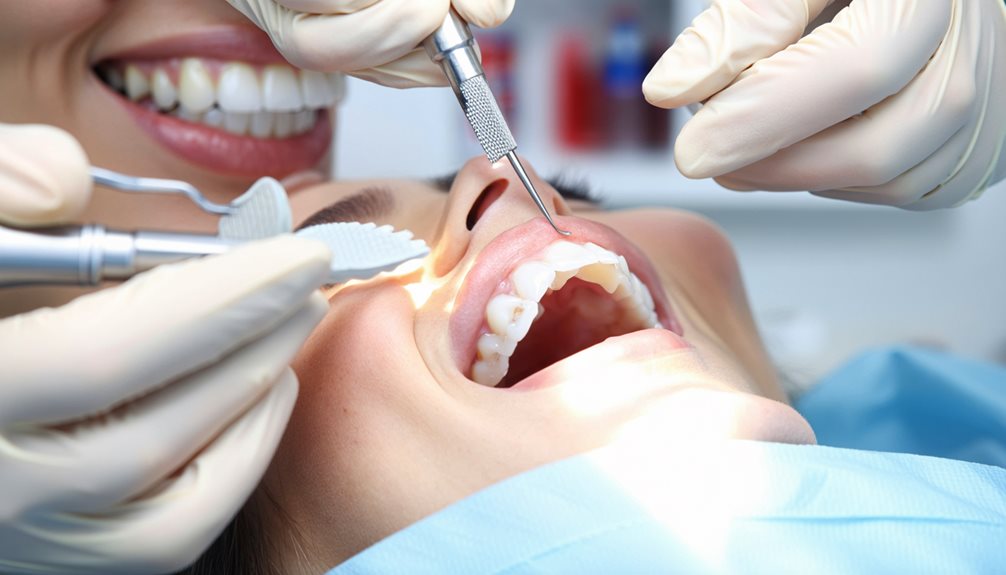
Managing periodontal disease effectively involves regular dental check-ups for early detection and professional cleaning to remove plaque. Proper oral hygiene, including correct toothbrush technique and daily flossing, is essential in controlling interdental plaque. A balanced diet rich in omega-3 fatty acids, calcium, and antioxidants supports gum health. Smoking cessation greatly reduces gum inflammation and improves oral outcomes. Implementing stress management techniques, like mindfulness meditation, can decrease stress-related inflammation. Antimicrobial rinses play a supportive role in reducing oral bacterial load. These strategies form the foundation for ideal periodontal health, with each aspect contributing to improved patient outcomes. Explore further for detailed insights.
Regular Dental Check-Ups
Regular dental check-ups are an essential component in the effective management of periodontal disease. These visits enable dental professionals to perform thorough examinations, which are critical for the early detection and intervention of periodontal issues.
Dental visits, a cornerstone of preventive care, offer patients tailored treatment plans that address their unique periodontal health needs. By integrating advanced diagnostics and innovative technologies, dental practitioners can identify subtle changes in gum health that may indicate the onset of periodontal disease, allowing for timely intervention.
Evidence-based strategies underscore the importance of structured dental check-ups in reducing the progression of periodontal conditions. Regular visits facilitate professional cleaning procedures that remove plaque and tartar—key contributors to periodontal disease—thereby maintaining the structural integrity of the gums and teeth.
Additionally, these appointments offer an opportunity for personalized patient education, empowering individuals to understand and manage their oral health proactively.
As dental medicine continues to evolve, embracing cutting-edge practices during regular check-ups can greatly enhance patient outcomes. By prioritizing preventive care through consistent dental visits, individuals can mitigate the risk of complex periodontal issues, ensuring a healthier, more resilient oral environment.
Proper Oral Hygiene
Effective oral hygiene practices play a vital role in the management and prevention of periodontal disease. A cornerstone of these practices is the implementation of proper toothbrush technique, which includes the use of a soft-bristled toothbrush angled at 45 degrees to the gum line. This technique guarantees the effective removal of plaque without causing trauma to the gingival tissues.
Brushing should be performed twice daily for a minimum of two minutes to maintain ideal oral health.
In addition to brushing, the importance of flossing cannot be overstated. Flossing reaches areas between the teeth that toothbrush bristles cannot access, effectively removing interdental plaque and reducing the risk of periodontal inflammation.
Daily flossing disrupts bacterial biofilm formation, which is essential in preventing the progression of periodontal disease.
For those seeking innovative solutions, electric toothbrushes with built-in timers and pressure sensors can enhance brushing efficiency and compliance.
Interdental brushes and water flossers offer alternative or adjunctive methods for plaque control, particularly for individuals with orthodontic appliances or limited manual dexterity.
Ultimately, personalized oral hygiene routines tailored to individual needs and preferences are key, guaranteeing thorough periodontal care and prevention.
Balanced Diet and Nutrition
A well-rounded diet plays a vital role in the management of periodontal disease, serving as a foundational component of thorough oral health care. Nutrient-rich foods are essential in fostering gum health and reducing inflammation. These include leafy greens, which are abundant in vitamins C and K, capable of enhancing tissue repair and reducing bleeding.
Omega-3 fatty acids, found in fish and flaxseeds, have shown efficacy in decreasing periodontal inflammation through their anti-inflammatory properties. Emerging evidence underscores the importance of antioxidants, such as those in berries and green tea, which may mitigate oxidative stress linked to periodontal tissue destruction.
Additionally, the intake of calcium and vitamin D supports the maintenance of alveolar bone density, thereby reinforcing tooth support. Hydration importance cannot be overstated, as adequate water intake aids in maintaining ideal salivary flow, essential for the neutralization of acids and removal of food particles.
Water also facilitates the distribution of essential nutrients throughout oral tissues. Patients are encouraged to innovate their diet by incorporating these foods and maintaining consistent hydration to support periodontal health.
To conclude, integrating a balanced diet with nutrient-rich foods and emphasizing hydration is a strategic, innovative approach to managing periodontal disease effectively.
Smoking Cessation
Smoking cessation is a critical component in the management of periodontal disease, as tobacco use is a well-documented risk factor that exacerbates gum health complications.
Evidence indicates that smokers are at a considerably higher risk for periodontal attachment loss and disease progression compared to non-smokers.
To support patients in quitting, a combination of behavioral counseling, pharmacotherapy, and ongoing support tailored to individual needs can enhance the success rates of smoking cessation efforts.
Impact on Gum Health
How does smoking cessation influence periodontal health?
The cessation of smoking considerably impacts gum health by reducing gum inflammation and decreasing plaque buildup. Tobacco smoke is known to alter the oral microbiome, favoring pathogenic bacteria that thrive in the periodontal environment. This leads to chronic inflammation and escalates the risk of periodontal disease progression.
Upon quitting smoking, the oral environment gradually shifts towards a more balanced microbiome, thereby reducing inflammation and enhancing the body’s immune response against plaque-induced conditions.
Clinically, studies have shown that former smokers exhibit a marked improvement in periodontal parameters, such as reduced pocket depths and enhanced attachment levels. This translates into tangible benefits for patients, as the healing process of periodontal tissues is maximized when smoking is eliminated from the equation.
Furthermore, cessation of smoking enhances vascularization in gingival tissues, promoting more effective delivery of nutrients and immune cells, which further facilitates repair and regeneration.
For patients seeking innovative approaches to periodontal health, smoking cessation is a pivotal step. By eliminating a major risk factor, patients can achieve better long-term outcomes, reducing the need for invasive interventions and enhancing the sustainability of periodontal therapies.
This evidence-based approach underscores the critical role of smoking cessation in maintaining ideal gum health.
Strategies for Quitting
Effective strategies for quitting smoking are vital for patients aiming to improve periodontal health. Smoking cessation is directly linked to reduced periodontal disease progression, as tobacco use is a notable risk factor. Implementing a structured cessation plan can greatly enhance patients’ oral health outcomes.
Among the various strategies, integrating support groups and behavioral therapy stands out as an evidence-based approach. Support groups provide patients with a sense of community and shared experiences, increasing motivation and accountability. These groups often facilitate the exchange of innovative cessation techniques, which can be essential for sustained abstinence.
Behavioral therapy, on the other hand, offers personalized interventions that address the psychological aspects of nicotine addiction. This therapy empowers patients by helping them develop coping mechanisms, set realistic goals, and identify triggers.
Research indicates that combining behavioral therapy with support groups markedly improves cessation success rates.
Stress Management Techniques
Chronic stress has been identified as a vital risk factor in the progression of periodontal disease, affecting both the inflammatory response and immune function.
Mindfulness meditation emerges as a compelling strategy to mitigate stress. This practice involves focusing on the present moment, which can greatly reduce stress-induced inflammation. Research indicates that regular mindfulness meditation sessions can lower pro-inflammatory cytokines, thus potentially decreasing periodontal tissue destruction. Patients may consider incorporating brief, daily mindfulness sessions to enhance their periodontal health.
Another effective technique is deep breathing, which can be seamlessly integrated into daily routines. Deep breathing exercises help activate the parasympathetic nervous system, lowering stress levels and promoting relaxation.
Clinical studies have shown that patients practicing deep breathing experience reduced stress markers, contributing to better immune function and less periodontal inflammation.
Use of Antimicrobial Rinses
Among the arsenal of strategies for managing periodontal disease, the use of antimicrobial rinses stands as a cornerstone in reducing pathogenic bacterial load. These rinses, when prescribed and utilized correctly, offer considerable antimicrobial effectiveness, disrupting biofilm formation and aiding in the control of gingival inflammation.
Clinicians recognize their role in complementing mechanical plaque removal, especially in patients with limited dexterity or those with areas challenging to access with traditional brushing and flossing methods.
The selection of an appropriate antimicrobial rinse depends on clinical findings and patient-specific needs. Common agents such as chlorhexidine gluconate and essential oil-based rinses have demonstrated efficacy in reducing plaque and gingival inflammation. Chlorhexidine, in particular, is lauded for its sustained antimicrobial action, though its use is typically advised for short-term application due to possible side effects such as staining.
Rinse frequency is pivotal in ensuring ideal outcomes. Typically, twice-daily use is recommended to maintain therapeutic levels of antimicrobial agents in the oral cavity.
Patient adherence to prescribed rinse frequency can considerably influence clinical results, underscoring the importance of patient education and regular follow-ups to monitor progress and adjust treatment protocols as necessary.
Professional Deep Cleaning
While antimicrobial rinses play a significant role in managing periodontal disease, they are most effective when used in conjunction with professional deep cleaning procedures.
Professional deep cleaning, a cornerstone of periodontal therapy, involves meticulous scaling techniques to remove plaque and calculus deposits from tooth surfaces and beneath the gumline. This procedure, often referred to as scaling and root planing, is vital for disrupting bacterial biofilms that contribute to periodontal disease progression.
Clinicians employ advanced scaling techniques, using both manual and ultrasonic tools, to guarantee thorough debridement with minimal invasion.
Ultrasonic scalers, which utilize high-frequency vibrations, have been shown to enhance the removal of subgingival deposits while optimizing patient comfort. Their ability to flush out bacterial toxins and reduce treatment time represents a significant innovation in the field.
Patient comfort is paramount during these procedures, and modern anesthetic options such as local anesthesia or topical numbing agents are employed to mitigate discomfort.
Additionally, patient education on post-procedural care and maintenance is essential in achieving long-term periodontal health.
Frequently Asked Questions
What Are the Signs of Advanced Periodontal Disease?
Advanced periodontal disease is characterized by significant gum recession, increased tooth mobility, deep periodontal pockets, and persistent inflammation. These clinical features result from progressive bone loss and require timely intervention to prevent further deterioration and tooth loss.
How Does Genetics Influence Periodontal Disease Risk?
Genetic predisposition and heredity factors greatly influence periodontal disease risk. Clinical studies indicate that genetic variations affect immune response and tissue integrity, necessitating personalized prevention strategies and innovative therapeutic approaches to effectively manage periodontal health in genetically susceptible individuals.
Can Hormonal Changes Affect Periodontal Health?
Hormonal fluctuations, particularly during pregnancy, considerably impact periodontal health by altering gingival tissue response to plaque, increasing susceptibility to inflammation and periodontal disease. Innovative approaches focusing on these hormonal effects are essential for tailored, patient-centered periodontal care.
Are There Alternative Treatments for Periodontal Disease?
Alternative treatments for periodontal disease include natural remedies, such as tea tree oil and green tea, which possess anti-inflammatory properties. Additionally, laser therapy offers a minimally invasive option, promoting tissue regeneration and reducing bacterial infection with precision.
How Does Periodontal Disease Affect Overall Health?
Periodontal disease considerably impacts overall health by contributing to systemic inflammation and altering the oral microbiome. Emerging evidence suggests these changes may exacerbate conditions like cardiovascular disease, diabetes, and respiratory infections, emphasizing the need for innovative therapeutic approaches.
Conclusion
Effective management of periodontal disease necessitates a multifaceted approach. Regular dental check-ups and professional deep cleaning are paramount for monitoring and controlling disease progression. Proper oral hygiene, including the use of antimicrobial rinses, is essential in maintaining periodontal health. Adherence to a balanced diet and nutrition, alongside smoking cessation, further supports oral wellness. Incorporating stress management techniques can mitigate risk factors related to periodontal disease. Collectively, these strategies form a thorough plan that prioritizes patient outcomes through evidence-based practices.

