
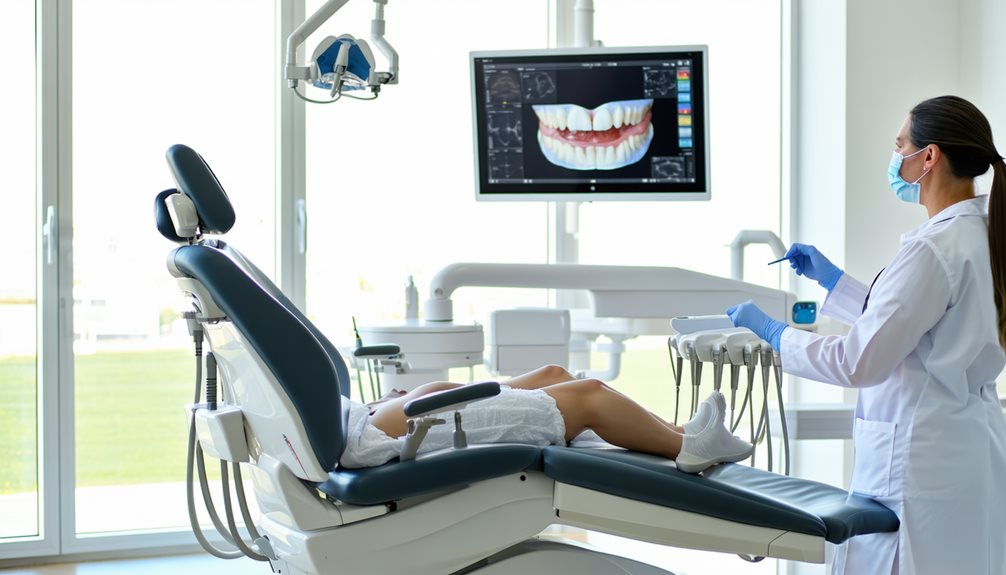
Modern periodontal treatments integrate cutting-edge digital imaging and minimally invasive techniques, enhancing diagnostic precision and clinical outcomes. Tools like cone-beam computed tomography and laser-assisted therapies minimize tissue trauma and reduce postoperative discomfort. Personalized treatment strategies, grounded in patient-specific data, align with ongoing advancements in biomaterials for rapid recovery and stable tissue regeneration. Evidence supports a decline in recovery duration and improved tissue attachment levels. The commitment to patient-centered care fosters engagement and aligns with preventive efforts, ensuring long-term oral health benefits. Engaging further will provide deeper insights into the substantial advantages of these advanced treatments.
Innovative Technology in Dentistry
Innovative technology in dentistry has greatly transformed periodontal treatments, enhancing both diagnostic accuracy and therapeutic outcomes. Central to this transformation is the integration of digital imaging, which facilitates precise evaluation of periodontal structures. Advanced imaging modalities such as cone-beam computed tomography (CBCT) offer three-dimensional insights, enabling clinicians to delineate periodontal disease with unprecedented clarity. These digital tools allow for meticulous assessment of bone loss and root morphology, which are critical in formulating effective treatment plans.
Furthermore, the advent of robotic surgery in periodontal care marks a noteworthy leap forward. Robotics in dentistry promotes precision and consistency during complex procedures. Systems equipped with haptic feedback and real-time imaging guide practitioners, minimizing human error and optimizing surgical outcomes. Evidence suggests that robotic-assisted procedures can lead to reduced operative time and enhanced patient recovery due to their meticulous execution.
Together, digital imaging and robotic surgery represent a paradigm shift in periodontal therapy, empowering dental professionals to achieve higher standards of care. These innovations not only streamline clinical workflows but also contribute remarkably to patient satisfaction by ensuring more predictable and successful treatment outcomes.
The application of such cutting-edge technology underscores an evolving landscape where precision meets innovation in periodontal health management.
Minimally Invasive Procedures
Minimally invasive periodontal procedures represent a significant advancement in modern dentistry, focusing on reducing healing time and minimizing tissue damage.
Techniques such as laser therapy and micro-surgery facilitate precise interventions that preserve healthy tissue, thereby promoting expedited recovery.
Additionally, these procedures have been shown to enhance patient comfort levels, as evidenced by reduced postoperative pain and swelling in clinical studies.
Reduced Healing Time
The evolution of periodontal treatments has ushered in an era where reduced healing time is becoming increasingly achievable through minimally invasive procedures. These advancements are fundamentally altering recovery strategies by enhancing healing techniques, thereby promoting rapid recuperation without compromising clinical outcomes.
The implementation of these sophisticated methodologies is transforming patient experiences, minimizing downtime, and optimizing recovery efficiency.
-
Advanced Instrumentation: Utilization of precision tools allows for decreased trauma during surgical interventions, thereby shortening recovery periods.
-
Laser-Assisted Procedures: These techniques employ targeted thermal energy to address periodontal issues with minimal tissue disruption, promoting swift healing.
-
Biomaterials and Growth Factors: Integration of bioactive agents accelerates tissue regeneration, enhancing the natural healing cascade and reducing convalescence time.
-
Patient-Specific Protocols: Tailored treatment plans, based on individual patient profiles, guarantee optimized healing trajectories through personalized therapeutic pathways.
The strategic application of these minimally invasive techniques in periodontal therapy is supported by evidence demonstrating notable reductions in postoperative recovery duration.
Less Tissue Damage
As the focus on reduced healing time illuminates the potential of modern periodontal treatments, the emphasis shifts to minimizing tissue damage through minimally invasive procedures. Advancements in periodontal therapy now integrate less invasive techniques, prioritizing tissue preservation and optimizing patient outcomes.
These innovations include laser-assisted periodontal therapy (LAPT) and the use of piezoelectric scalers, which offer precision and reduced collateral damage to surrounding tissues.
Laser-assisted treatments selectively target diseased tissue, thereby preserving healthy gingival structures and ensuring minimal disruption. This precision decreases postoperative discomfort and expedites recovery, aligning with the overarching goal of minimizing tissue damage.
Similarly, piezoelectric scalers operate at specific frequencies to gently dislodge calculus deposits without harming the delicate periodontal ligament or adjacent tooth surfaces. This method underscores the commitment to tissue preservation, ultimately facilitating the regeneration of periodontal attachment with minimal intervention.
Evidence supports the efficacy of these techniques in reducing periodontal pocket depths and improving clinical attachment levels while maintaining aesthetic and functional integrity.
Consequently, these less invasive approaches not only enhance clinical outcomes but also embody the innovative spirit of contemporary periodontal care, meeting the demands of patients seeking advanced, tissue-sparing solutions.
Enhanced Comfort Levels
In the domain of periodontal therapy, enhancing patient comfort is a vital consideration, achieved through minimally invasive procedures that prioritize patient-centered care.
Advanced techniques, such as laser-assisted periodontal therapy and guided tissue regeneration, have revolutionized treatment protocols, emphasizing reduced trauma and faster recovery. These innovations considerably contribute to patient comfort and anxiety reduction, fostering a more positive therapeutic experience.
To elucidate the benefits of minimally invasive periodontal procedures, consider the following:
-
Reduced Pain and Discomfort: By minimizing incisions and trauma to the gingival tissues, these techniques decrease postoperative pain, thereby enhancing patient comfort.
-
Anxiety Reduction: The use of less invasive, precise tools like lasers reduces the need for traditional surgical instruments, which can alleviate patient anxiety associated with conventional methods.
-
Accelerated Healing: Less tissue disruption results in quicker recovery times, allowing patients to resume daily activities sooner and with greater ease.
-
Improved Aesthetic Outcomes: Preservation of healthy tissue guarantees that esthetic integrity is maintained, a vital consideration for patients concerned with cosmetic results.
Such advancements underscore the essential role of technology in transforming periodontal therapy.
Enhanced Treatment Outcomes
Driven by advancements in dental technology and clinical practices, modern periodontal treatments have greatly enhanced treatment outcomes, offering patients improved prognoses and quality of life. Through the integration of evidence-based practices, clinicians are now able to tailor treatment plans that align closely with individual patient needs, ensuring a more personalized and effective approach.
This patient-centered care model emphasizes the importance of understanding the unique periodontal condition of each patient, allowing for targeted interventions that are both precise and innovative.
Technological innovations such as digital imaging and laser-assisted procedures play a pivotal role in this paradigm shift. These tools enhance diagnostic accuracy and procedural efficiency, minimizing tissue trauma and promoting peak healing.
In addition, regenerative techniques, including the use of growth factors and biomaterials, have shown promising results in restoring periodontal tissues, which were once considered irreparable. Recent studies indicate that these modern methodologies lead to superior clinical outcomes, such as reduced pocket depths and increased attachment levels.
The adoption of such advanced therapies not only aligns with the current trajectory of dental innovation but also substantiates the commitment to improving long-term periodontal health.
As a result, patients experience not only enhanced therapeutic results but also a significant improvement in overall oral health.Faster Recovery Times
Recent advancements in periodontal treatments have greatly contributed to faster recovery times, primarily through the adoption of minimally invasive procedures and advanced healing techniques.
These approaches, supported by clinical evidence, minimize tissue trauma and promote accelerated cellular regeneration, thereby reducing patient downtime.
As a result, patients benefit from a more efficient return to normal function and improved overall treatment satisfaction.
Minimally Invasive Procedures
As advancements in dental technology continue to evolve, minimally invasive periodontal procedures have gained significant traction due to their ability to markedly reduce recovery times while maintaining therapeutic efficacy.
These procedures prioritize patient centered care by focusing on limiting tissue trauma, preserving healthy structures, and enhancing patient comfort.
-
Laser-Assisted Periodontal Therapy (LAPT): Utilizes laser technology to precisely target periodontal pathogens, minimizing tissue damage and promoting faster healing.
-
Minimally Invasive Surgical Techniques (MIST): Employs smaller incisions and specialized instruments to reduce postoperative discomfort and expedite recovery.
-
Piezosurgery: Uses ultrasonic vibrations for bone surgery, offering precision and reduced trauma compared to conventional methods.
-
Non-Surgical Periodontal Treatment: Involves scaling and root planing with advanced ultrasonic devices, enhancing plaque removal efficiency while preserving soft tissue integrity.
Evidence supports that these minimally invasive techniques not only facilitate superior clinical outcomes but also align with patient centered care principles by offering reduced pain, swelling, and downtime.
As dental professionals endeavor to meet the evolving needs of patients seeking innovation in periodontal treatment, the integration of these cutting-edge modalities becomes imperative for delivering optimized, patient-focused care.
Advanced Healing Techniques
Enhancing recovery times in periodontal treatment hinges on the implementation of advanced healing techniques that leverage biological and technological innovations to expedite tissue regeneration and repair.
Central to these advancements are regenerative therapies, which utilize growth factors and biomaterials to stimulate the body’s intrinsic healing mechanisms. These therapies have been shown to considerably accelerate the formation of new bone and soft tissue, thereby reducing the overall recovery period.
Laser applications, another cornerstone of modern periodontal care, offer precision and minimal invasiveness, facilitating quicker healing. Utilizing specific wavelengths, lasers can effectively debride periodontal pockets, sterilize infected areas, and promote coagulation. This reduces postoperative discomfort and inflammation, allowing for more efficient tissue recovery.
The precision of laser applications minimizes collateral damage to surrounding tissues, further contributing to faster convalescence.
Clinical studies underscore the efficacy of these advanced techniques, illustrating enhanced outcomes regarding tissue attachment and reduced probing depths.
Reduced Downtime Benefits
Building on the advancements in healing techniques, reduced downtime is a pivotal benefit of modern periodontal treatments.
This evolution in dental care has been greatly shaped by innovative recovery strategies that facilitate faster healing and minimal disruption to patients’ daily lives. Enhanced protocols guarantee that the shift from treatment to full recovery is seamless, supporting ideal outcomes with minimal discomfort.
Key elements contributing to reduced downtime include:
-
Minimally Invasive Techniques: Procedures such as laser therapy and guided tissue regeneration minimize tissue trauma, accelerating the healing process and reducing postoperative pain.
-
Advanced Materials: The use of bioactive materials promotes natural healing processes, enhancing tissue integration and expediting recovery.
-
Personalized Recovery Plans: Tailored recovery strategies, customized to the individual needs of the patient, reduce complications and enhance healing times.
-
Comprehensive Patient Education: Educating patients about postoperative care enhances adherence to recovery protocols, thereby facilitating quicker recovery and reducing the incidence of complications.
The integration of these factors underscores the superiority of modern periodontal treatments.
Personalized Treatment Plans
In the domain of modern periodontal therapy, personalized treatment plans emerge as a cornerstone for achieving ideal patient outcomes. With the advent of advanced diagnostic tools and technologies, dental professionals are now equipped to perform customized assessments that meticulously evaluate each patient’s unique periodontal condition. These assessments facilitate the development of tailored solutions that address the specific clinical needs and lifestyle considerations of the individual.
Personalized treatment plans are grounded in evidence-based practices, ensuring that interventions are not only innovative but also scientifically validated. By leveraging an extensive understanding of the patient’s medical history, genetic predispositions, and current periodontal status, clinicians can design interventions that optimize periodontal health while minimizing potential risks. This approach allows for precision in treatment modalities, whether it be through minimally invasive surgical techniques, targeted pharmacotherapy, or innovative regenerative procedures.
Moreover, personalized treatment plans foster enhanced patient engagement, as individuals are more likely to comply with regimens that resonate with their personal health goals and circumstances. The integration of patient-specific data into the decision-making process exemplifies the progressive shift towards individualized healthcare, ultimately leading to improved clinical outcomes.
This methodological advancement underscores the importance and efficacy of personalized care in modern periodontal therapy.
Long-Term Oral Health Benefits
The implementation of personalized treatment plans in periodontal therapy offers profound long-term oral health benefits. Such tailored strategies underline the importance of preventive care and a holistic approach, ultimately resulting in improved periodontal stability and systemic health.
By focusing on patient-specific needs, these treatments provide a sustainable pathway to maintaining oral health.
Key long-term benefits of modern periodontal treatments include:
-
Reduced Risk of Disease Recurrence: Personalized plans facilitate targeted interventions that address the root causes of periodontal disease, decreasing the likelihood of recurrence and promoting sustained oral health.
-
Improved Systemic Health: Emerging evidence highlights the interconnection between periodontal health and systemic conditions such as cardiovascular disease and diabetes. A holistic approach guarantees not only oral health improvement but also contributes to overall well-being.
-
Decreased Tooth Loss: Effective periodontal therapy considerably reduces the risk of tooth loss by reinforcing periodontal support structures, ensuring dental functionality and aesthetics are preserved.
-
Cost-Effectiveness: Implementing preventive care through personalized treatment can lower long-term dental care costs by mitigating the need for extensive restorative procedures.
Frequently Asked Questions
Are Modern Periodontal Treatments More Expensive Than Traditional Methods?
The cost comparison between modern and traditional periodontal treatments often reveals higher initial expenses for advanced techniques; however, these approaches typically offer enhanced treatment longevity, potentially reducing long-term costs and aligning with evidence-based innovations in periodontal care.
How Do Modern Periodontal Treatments Affect Dental Insurance Coverage?
Modern periodontal treatments may impact dental insurance policies by influencing coverage limits. While advanced techniques offer superior outcomes, they can result in varied reimbursement rates, requiring patients to thoroughly review their insurance plans for applicable benefits and potential out-of-pocket costs.
What Are the Potential Side Effects of Modern Periodontal Treatments?
Modern periodontal treatments can lead to potential side effects, such as increased gum sensitivity, although these effects are generally transient. Treatment efficacy remains high, with evidence-based advancements minimizing risks and enhancing patient outcomes, appealing to those seeking innovative solutions.
How Can I Find a Qualified Periodontist for Modern Treatments?
To find a qualified periodontist for modern treatments, utilize online reviews and referral networks. Emphasize clinicians with extensive experience, verified credentials, and a commitment to evidence-based practices, ensuring innovative and effective periodontal care.
Are These Treatments Suitable for Children and Teenagers?
Modern periodontal treatments are generally suitable for enhancing child dental health and teen periodontal care. However, clinical evaluation and tailored treatment plans are essential to address specific conditions, ensuring ideal outcomes while integrating evidence-based practices and innovative techniques.
Conclusion
Modern periodontal treatments offer a paradigm shift in dental care by integrating innovative technology and minimally invasive procedures. These advancements lead to enhanced treatment outcomes and faster recovery times, providing significant advantages over traditional methods. Personalized treatment plans cater to individual patient needs, ensuring best results and promoting long-term oral health benefits. The evidence supports the efficacy of these contemporary approaches, highlighting their role in improving periodontal health and patient satisfaction in clinical practice.

